Last Updated:
In North Chicago, a sale or rental inspection can prompt knob-and-tube replacement. The city's sale/rental checklist explicitly addresses visible knob-and-tube wiring. Chicago Knob and Tube offers residential assessment and replacement planning to help define the work behind such a finding. Start with the city's actual written requirement for the property; do not turn a checklist entry into a claim that every older building has the same wiring or must undergo identical work.
What the North Chicago checklist establishes
The checklist linked by the North Chicago Building Department includes a visible-wiring condition excluding knob-and-tube wiring. Its context is sale/rental inspection. That makes it directly relevant when a property enters that process and visible K&T is identified. It does not independently establish a universal removal order for every concealed wire in every city property.
Obtain the full written finding and ask the city what action and documentation it expects. The location of the observation matters. A visible basement section may be the reason for the finding, while the circuit it belongs to extends beyond the basement. The electrical assessment should address that distinction rather than treating removal of the visible portion as automatically sufficient.
The active-versus-abandoned guide explains why appearance alone cannot resolve the electrical status. A support or wire that seems unused may still require investigation before its relationship to the installation is known. Do not cut, pull or disconnect old components in preparation for an inspection. The contractor should establish what is present and how the proposed remedy addresses it.
Distinguish municipal response from a buyer or insurer request
A sale may involve several separate readers of the same property information. The municipality may issue a correction finding, a buyer may ask for a particular outcome and an insurer may require documentation under its own underwriting rules. None of those requests should be paraphrased into a single promise that “replacement will satisfy everyone.” Ask each party for its written requirement.
Provide those requests before the scope is priced. If the city requires action on an observed condition while the insurer asks for confirmation that no active knob and tube remains in a wider area, the investigation may need different boundaries. The insurance-letter guide explains why a limited inspection cannot support an unrestricted statement about concealed wiring.
For a transaction, keep the electrical decision separate from legal or contractual advice. Our selling guide helps organize the electrical questions, but the city and other parties determine their respective acceptance requirements. A proposed closing date should be shared as a scheduling constraint, not treated as evidence that the installation or inspection can be completed by then.
Check the electrical history of older North Chicago homes
CMAP's housing profile, based on ACS five-year estimates, identifies 1,479 North Chicago units built before 1940, representing 18.7% of its housing units. Older homes therefore need individual review, even though most housing units were built after 1940. It does not measure how many homes still contain knob and tube after later electrical work.
A property's records may be more informative than its age alone. Gather previous electrical permits or descriptions of renovation work if they are available. A kitchen update or a panel change can be relevant without proving complete branch-circuit replacement. The mixed-wiring guide explains how old and new circuits can remain in the same building.
Where records are missing, a defined assessment should distinguish what can be observed or investigated from what remains inaccessible. The report should name the areas considered and the limitations. It should not use the absence of visible components in one room to certify every concealed route elsewhere.
Plan your wiring project
Found old wiring during an inspection or planning a renovation? Tell us about the property and share any report you already have.
Get an Estimate ↗Set the replacement boundary before comparing prices
A proposal responding to a North Chicago finding should identify the circuits, devices or areas it covers. It should describe the new installation and the handling of the replaced old wiring. If old wiring remains outside the work, that limitation must be explicit. A label such as “remove visible knob and tube” can be too narrow when the intended outcome concerns the whole active branch.
The partial replacement service may be relevant where a limited circuit scope is supported by the investigation and accepted as the required response. A wider replacement scope may be needed for a different requested endpoint. Neither option should be selected simply because one sounds more reassuring; compare the work each actually includes and the evidence it will produce.
Access and restoration also affect the comparison. Identify which finished areas may need openings and who repairs them. State whether repair includes painting or only a prepared surface. Repair costs depend on the surfaces affected and the finish standard you agree on. The quote comparison guide helps keep those responsibilities visible.
Coordinate the local process and retain the outcome
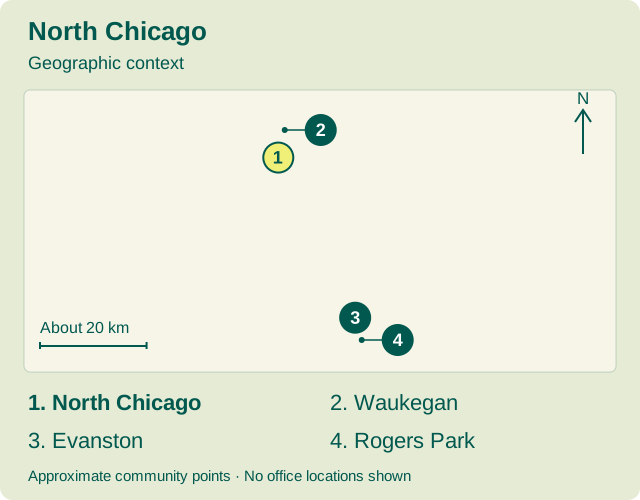
Ask the Building Department and contractor which applications and inspections apply to the agreed work. Do not borrow the requirements from nearby Waukegan merely because the communities are adjacent. The contractor should identify who submits information, who requests inspection and when work must remain available for review. Changes discovered during installation need a written explanation and any required municipal coordination.
At completion, retain the final scope, relevant inspection documents and any statement prepared for the requesting party. The completion guide explains why those records should describe actual work rather than imply a blanket guarantee. Compare Waukegan's separate local process only as background. Request a North Chicago project discussion with the original checklist finding and the outcome you have been asked to document.
Questions about rewiring in North
Does North Chicago’s checklist create a universal K&T removal rule?
The city’s published sale/rental inspection checklist addresses visible wiring. Do not expand that context into a blanket citywide mandate without a property-specific determination. Obtain the actual finding and ask the Building Department what work and documentation are required for the property in question.
Is cutting away visible North Chicago basement wiring an adequate response?
Do not cut or disturb it. The visible section may be part of a circuit extending into finished rooms, and its status cannot be established by appearance alone. An electrician should investigate the circuit and define a remedy that addresses the finding rather than merely removing the visible evidence.
What if a North Chicago insurer asks for more than the city does?
Keep the requests separate and provide both in writing. A limited municipal correction may not support an insurer’s broader requested statement. The contractor can explain what the assessment and replacement scope can document; the insurer decides whether that evidence meets its own requirements.
What belongs in the price of a North Chicago K&T correction?
The estimate should cover the defined response to the finding, including the relevant circuit work and agreed access or restoration. Ask how permit and inspection responsibilities are handled and what is excluded. A price for removing visible pieces is not comparable to replacement of the complete active branches involved.
What belongs in a North Chicago estimate request after inspection?
Include the complete written finding, the property type and any separately stated buyer or insurer requirement. Add available electrical records and known access limitations. Explain the deadline without assuming it is achievable, so the contractor can assess the work and municipal coordination before proposing a schedule.
Need an estimate for your home?
Get an Estimate ↗